
Everything You’ve Wanted to Know About Superheroes
Peter: “Listen, Cleveland, the reason I asked you out here… I’ve been wanting to talk to you about something. In Superman II, what is the story with that cellophane S that Superman rips off his chest and throws at the bad guy?”
Family Guy “The Cleveland-Loretta Quagmire” (Season 4, Episode 5)
Superhero stories are freaking weird. Fans already suspend their disbelief to believe that a man can fly, that villains keep returning to wreak havoc, and that every major city wasn’t reduced to rubble decades ago. But there’s often one thing that breaks through and befuddles them.
Superhero frequently asked questions are exactly that, the parts of each story that people struggle to wrap their heads around. They are easy jokes to make or legitimate criticism that annoys critics. But just as often, there is a reasonable explanation beyond “that’s how the author wanted to write it.” So what are the top 5 superhero FAQs and their answers? Let’s find out.
Scene Select
#5 Why Can’t Prisons Hold Supervillains?
J. Jonah Jameson: “They assure me that [Rhino’s] been moved to a ‘more secure’ cell. Now I’m no expert on supermax prisons, but isn’t the whole point of them that there isn’t anything else more secure? I mean, he’s a seven hundred pound maniac with an indestructible horn! If there’s a more secure cell, WHY WASN’T HE IN IT!?”
Spider-Man (PS5)
Superhero FAQ: Jails have revolving doors in superhero universes. It doesn’t matter if that jail is on another planet, another dimension, or if demons have dragged them kicking and screaming to Hell. The bad guys will be out in a month, tops. How can the jails be that bad?
The Answer: Many villains can leave whenever they want because of their powers. How do you stop Hydro-Man from flowing through the shower drain or Sidewinder from teleporting the Serpent Society to freedom? Legal loopholes are also a problem. Murtagh won’t survive telling Doctor Doom that his diplomatic immunity has just been revoked.
Prisons made with supervillains in mind are also useless. Many villains treat Arkham Asylum as a hotel that they can leave at will. Belle Reve Penitentiary will have villains on the Suicide Squad before they see their cells. Marvel’s super prisons, The Vault and The Raft, were both destroyed because writers decided they were worthless.
#4 Superhero FAQ: Why Do Secret Identities Work?
Lois: “I would’ve figured it out. Eventually.”
Superman: Brainiac
Clark: “You keep believing that.”
Superhero FAQ: Secret identities are flimsy things. Someone’s bound to notice that Peter Parker and Spider-Man are never in the same room or that Bruce Wayne is limping the day after Batman was beaten by Bane. Unmasked heroes like Zatanna and Sailor Moon should be instantly recognizable. Clark Kent’s glasses won’t fool everyone forever. So how can a secret identity stay secret?
The Answer: Heroes often create alibis. No one can prove that someone else was in the Spider-Man costume shaking hands with Peter. Who would guess that Batman was speaking into two phones so that he and Bruce Wayne could have a conversation? Magical glamours, time travel, and clones are all easy cheats to sidestep the problem.
Superman wrote the book on secret identities. Aside from his glasses, he wears oversized clothes, slouches, alters his voice, and uses super speed to blur his features. But none of that matters because most people don’t think that he has a secret identity. They know he’s Kal-El of Krypton and lives in the Fortress of Solitude when he isn’t stopping crime. They’d never look for Superman buying bagels on his way to a 9-5 job as Clark Kent.
#3 Do Superheroes Create Their Own Villains?
Syn Shenron: “How dare you criticize your creation?! We’re here because of you. All of the Shadow Dragons were created because you abused the Dragon Balls, remember? It all started with you. Your world is crumbling because of your actions. You were warned about the overuse, but you didn’t listen. This is all your fault.”
Dragon Ball GT “The One-Star Dragon” (Season 4, Episode 9)
Superhero FAQ: Supervillains start crawling out of the woodwork when a superhero shows up. Thieves and gunmen are replaced with cyborg ninjas, kaiju, and godlike magicians. Collateral damage and fatalities increase accordingly. Does the presence of a superhero inherently lead to armies of supervillains?
The Answer: Supervillains chose to be bad and then got lucky by gaining powers. Despite any powers or tools, they would still be driven to commit crimes because of greed, rage, mental health issues or bad luck.
Superheroes are rarely the direct cause of supervillains existing. You might get a Lex Luthor crusading after being shown up by Superman, but that is an exception. Many times, a supervillain causes the superhero to exist in response and hone themselves against a threat that ordinary people can’t stop. Famous examples: Master Splinter training four turtles to avenge his family and Steve Rogers undergoing dangerous procedures so he can become strong enough to fight Nazis.
Dr. Venkman said it best. “Sometimes, shit happens, someone’s gotta deal with it, and who ya gonna call?”
#2 Superhero FAQ: Where is Everyone?
Spider-Man: “There’s gotta be someone you can call in for this. What about Thor?”
Spider-Man: Far From Home
Nick Fury: “Off world.”
Spider-Man: “Dr. Strange?”
Fury: “Unavailable.”
Spider-Man: “Captain Marvel?”
Fury: “Do not invoke her name.”
Superhero FAQ: It’s the climax of a superhero movie and the Big Bad’s scheme is about to succeed. Green Goblin’s doomsday laser will kill millions of puppies. Darkseid is about to solve the Anti-Life Equation. The hero is fighting as hard as they can, but where are their friends? The Justice League, Avengers, KISS, or unaffiliated heroes? Why aren’t they helping?
The Answer: The other heroes are almost always busy. Carnage is leading a Symbiote invasion? Too bad. Captain America’s across the country fighting HYDRA, Punisher’s sleeping off a bullet wound, and the Fantastic Four are in ancient Egypt. They would help, but the other heroes are out of position or preventing their own villains from taking advantage of the disaster.
Lowered stakes are the other major barrier. How can Robin be in danger if Kid Flash disarmed all of the mobsters? The Kingpin can fight Daredevil, but he wouldn’t stand a chance against She-Hulk. It’s hard to keep stories interesting when the superhero’s first resort is calling in his pal, Superman.
#1 Why Don’t Heroes Kill the Villains?
Kid Omni-Man: Do it! Kill him! Before he escapes or something! Look at what he did! Kill him so he can never do it again! WHAT ARE YOU WAITING FOR!?”
Invincible “All I Can Say Is I’m Sorry” (Season 3, Episode 7)
Superhero FAQ: We’ve established that prisons are useless against supervillains. The bad guys will bust out and go on more rampages, stealing or killing. Only superheroes can stop them, but that’s a stopgap. Why not ensure that the villain is stopped permanently? Why not kill?
The Answer: Superheroes are crisis responders, not the judge, jury, and executioner. They respond to threats with proportional force, and preventing further escalation. Many supervillains are mentally ill or common crooks with fancy tech who can be rehabilitated. Robots or monsters aren’t human, so killing is kosher. But what about pure evil characters? Look no further than Batman and The Joker.
If Batman kills The Joker, he’s lost. Commissioner Gordon can’t work with him ever again. The Bat-Family and Justice League would be split down the middle about whether to support him. His villains would become lethal by necessity because their obsessions won’t let them stop. Even if Batman never kills again, they know that he might. Batman also knows that many of the DC’s darkest universes branch off from The Joker’s death. Keeping The Joker alive is Batman’s only rational choice.
What superhero FAQs have got you curious? Did we miss a common question? Ask us in the comments.
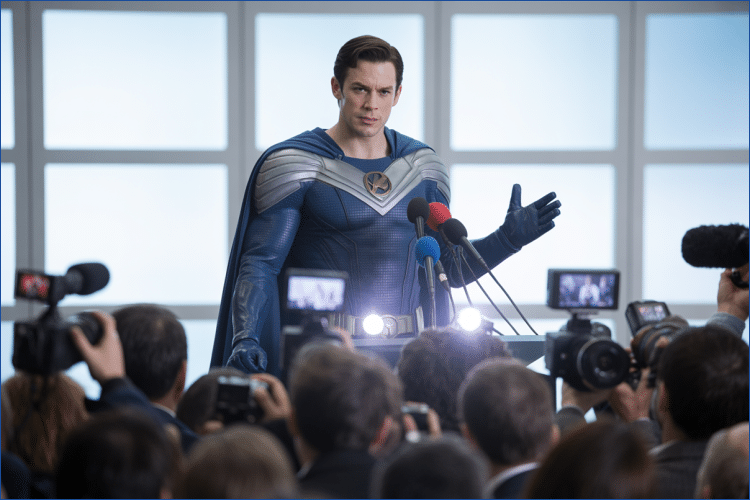
Image by Ideogram, prompted by Jared Bounacos

Jared Bounacos has written for Movie Rewind since 2016.


Leave a Reply